Why Instagram reach dropped and what to check first
How to tell a real reach drop from normal fluctuation using Instagram's own stats, what the "Account status" section shows, and three reactions that make things worse.
- Social media and AI
- Diagnosis
- ≈ 9 minutes
The account was working, then reach dropped by half. Below is what to check, in order, and why the first thing that comes to mind usually isn't the real cause.
Two screens inside Instagram itself that show what happened, and what to do after checking them. Nine-minute read.
First, check what you're comparing against
The feeling that "it got worse" and the actual numbers disagree more often than you'd think.
Feed reach always fluctuates, and the first question isn't "why did it drop" but "dropped compared to what."
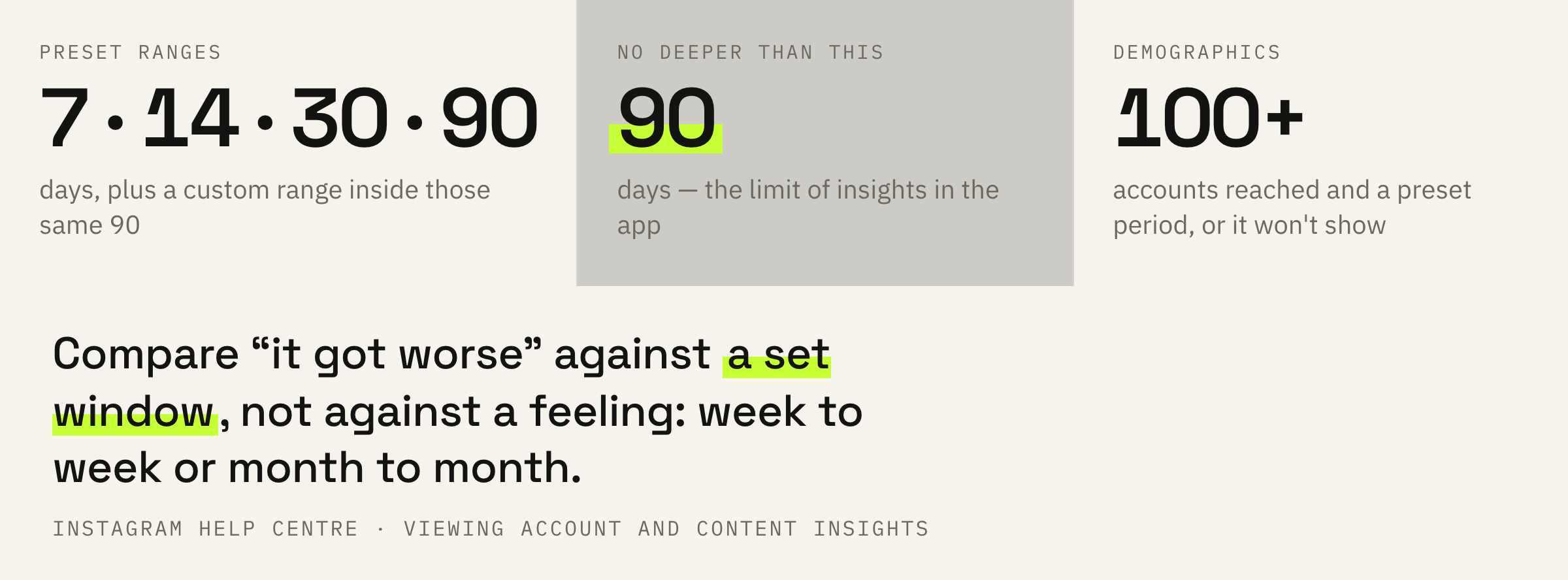
Instagram only gives stats for the last 90 days. There are five ready-made periods: 7, 14, 30, and 90 days, plus a custom range within those same three months.
So you can't compare this week to the same week a year ago inside the app. Take two neighboring periods of equal length and compare them to each other.
On instagram.com, open "Dashboard" in the left menu, then "Insights," then "Account" or "Content," and pick a range. If there's no stats at all, the account is private: private accounts don't get shown insights. After switching back to public, data recovers within 90 days.
Follower demographics don't appear right away. They need one of the preset periods and over a hundred reached or engaged accounts within it, so at seven days it's usually still missing.
Instagram separately warns that some metrics are approximate and still being refined. Chasing a few percentage points of difference in them is pointless.
Where the reach was coming from and where it went
Followers and recommendations are two separate faucets.
Impressions come from two places. Followers see you in their feed; everyone else sees you through recommendations: Feed, Search, Explore, Reels, and Suggested Accounts.
Instagram describes the line between them with a rule that gives you a ready-made diagnosis. Even when an account stops qualifying for recommendations, followers still see its content.
That's the fork in the road. If reach among non-followers dropped but followers' reach held steady, the issue is recommendations. If both dropped, the cause isn't there.
Settings, then "Help," then "Account status." For a professional account, it states outright whether the content qualifies for recommendations and shows examples of the posts that disqualified it. You can also request a review from there.
Three things in this section catch people off guard more than anything else.
And a caveat the platform states itself: meeting the conditions doesn't guarantee a spot in recommendations. It's eligibility, not a promise.
Why the drop isn't even everywhere
Feed, Explore, and Reels each have different signals.
Instagram publishes ranking signals separately for each surface and says it lists them roughly in order of importance. The lists don't match, which explains why reach drops unevenly.
On Explore, a post's popularity comes first; in the feed, it's second after the viewer's own activity.
The practical takeaway is simple. If reach among non-followers dropped while followers' feed reach held up, look at the response in the first few hours: it matters most where you're being shown to strangers.
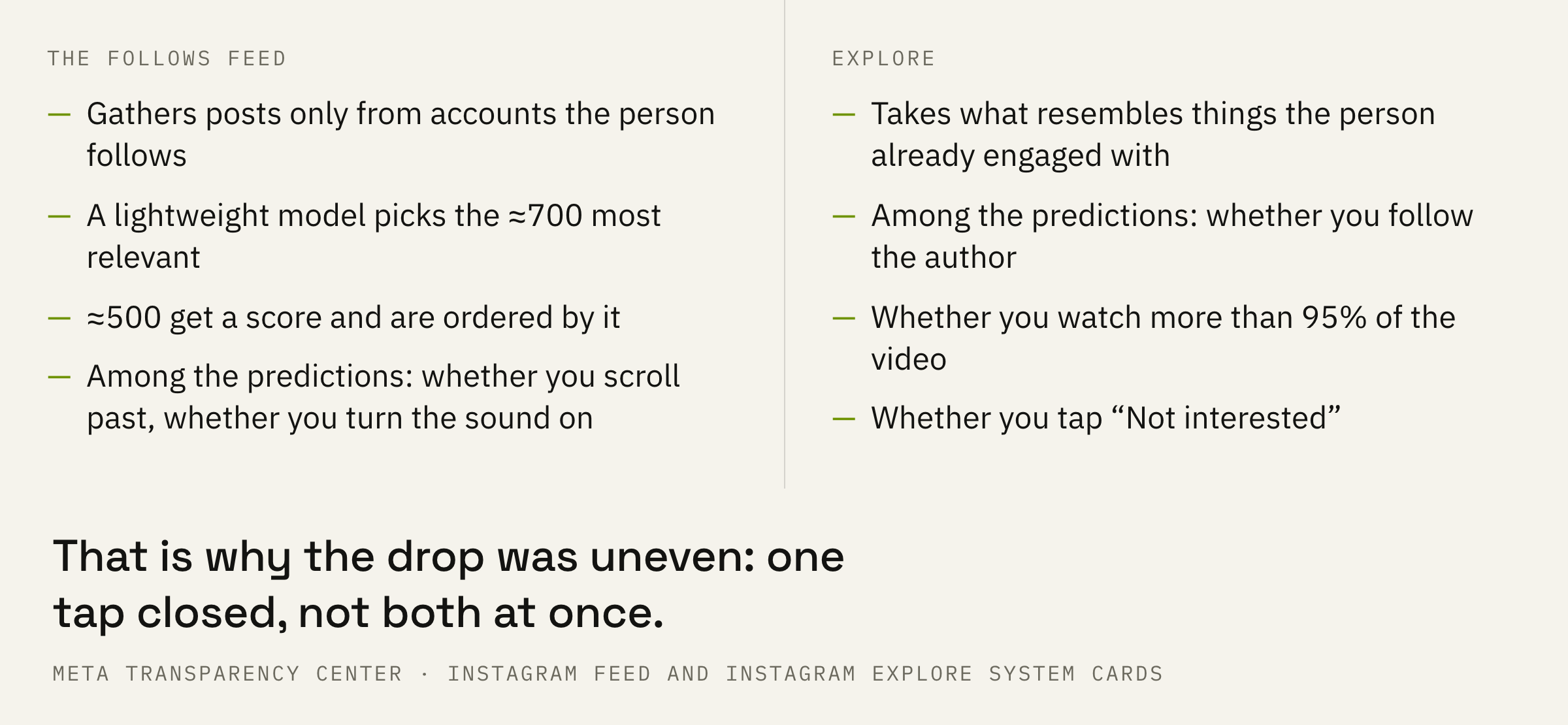
Reels has its own list, where the video's own data only ranks third, after viewer activity and their history of interacting with the author.
We once decided the algorithm was to blame. We posted more, reach kept falling, and the explanation seemed obvious. The real culprit was our own plan for 480 pieces of content, not the platform.
What it looked like in full — in the breakdown of the 480-piece content plan.
A week's worth of actions
Three steps, one change at a time.
Step one: if "Account status" flagged violations, fix them and wait. That's the only place where the platform names the cause itself, and there's no point arguing with it.
Step two: if there are no violations but your posting frequency went up, drop back to the previous one for two weeks. There's no cheaper check than that.
Third: if frequency hasn't changed either, change the hook. Change how the video opens, the first second and a half. The topic and niche stay the same.
One of our clients had a ceiling of 300,000 views. We checked the stats to see at which seconds people were dropping off, and combined the expertise of studio filming with the dynamics of viral videos. The first video using the new approach got 1,800,000 views in under two days.
Change one thing at a time. Change frequency, hook, and topic all at once, and you'll only find out what worked by accident.
If your reach has dropped and you don't know where to start, we'll look at your account and tell you exactly where the views got lost.
What not to do
Three reactions that make things worse.
There's also the opposite extreme: stopping posting until you find the cause. Consistency is the one thing you need to keep no matter what: one post a day, every day, beats seven posts on Monday and silence after.
Consistency and volume are different things. One heals, the other breaks.
What to do next
One action for this week.
Open two screens in a row. First, the 30-day stats against the previous 30 days, then "Account Status."
Then check one item at a time and wait two weeks for each. That way you get an answer instead of a guess.
We'll look at your profile, tell you which formats will bring reach specifically in your niche, and calculate how long it'll take to pay off.
If you want your reach to stop being a lottery — leave a request. We'll get in touch if there are open slots right now. Usually there's a waitlist, so you may have to wait.