Similar channels on Telegram: the only showcase there is
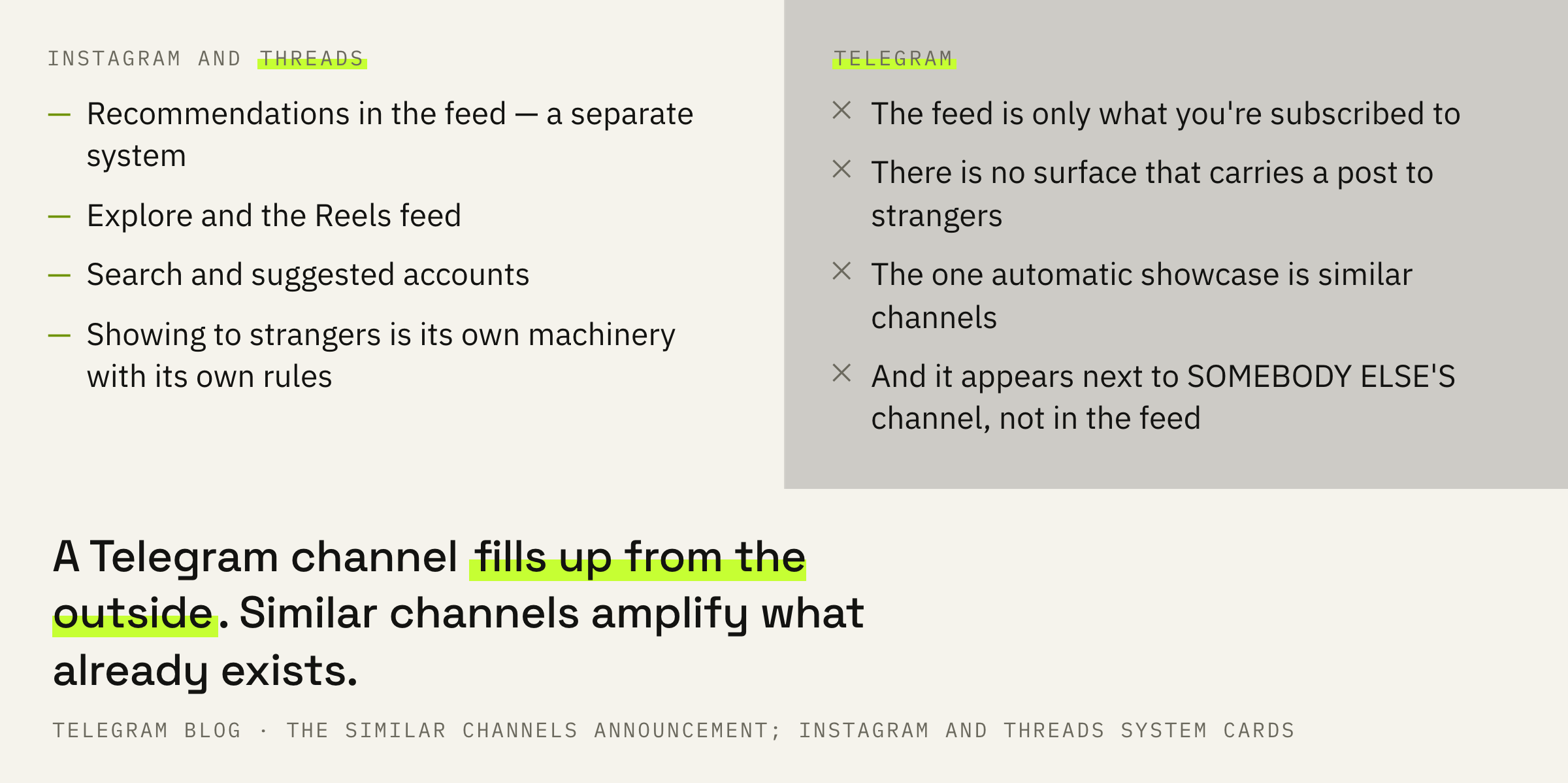
On Telegram the feed shows only what you're subscribed to. The one automatic showcase is similar channels, and they are selected by audience overlap, not by the channel description.
- Social media & AI
- Problem breakdown
- ≈ 8 min
On Telegram the feed shows only what a person is subscribed to. An unfamiliar channel cannot get in there on its own, and that changes the whole conversation about growth: Telegram has exactly one automatic showcase, and it is built differently than people expect.
How Telegram assembles its list of similar channels and why you can't will your way into it. What follows from that for growth, and what the platform doesn't promise. Eight minutes of reading.
Telegram has no feed that carries you to strangers
You can see it by simply opening the app.
Open Telegram and look at what's displayed. Only the chats and channels you're subscribed to. There is no feed there into which the platform would slip posts by authors you don't know.
That is the main difference from Instagram and Threads, where showing to strangers is a separate system with rules of its own. On Telegram there is no such system at all, and channel growth works differently.
The very appearance of this feature says the same thing. Before it, the platform had almost no automatic way of finding channels: either someone sent you a link, or you didn't find it at all.
A channel on Telegram doesn't grow by itself. It gets filled from the outside: through links, mentions, your posts on other platforms. The one exception is the list of similar channels, and that's what comes next.
How similar channels work
Three lines from the announcement that explain everything.
A person sees the list of similar channels in two places: right after joining a channel, and in a separate tab in the channel's profile. It is assembled neither by an editor nor by the topic you specified.
Only public channels appear in the list, they are selected automatically based on similarities in their subscriber bases.
Telegram blog · the similar channels announcement
There are two conditions here, and both are hard. First: the channel has to be public. A private one doesn't make it into such lists at all, however good it may be.
The second matters more. Selection goes by audience overlap: next to a channel it shows the ones the same people are subscribed to. Not by name, not by description, not by keywords in posts.
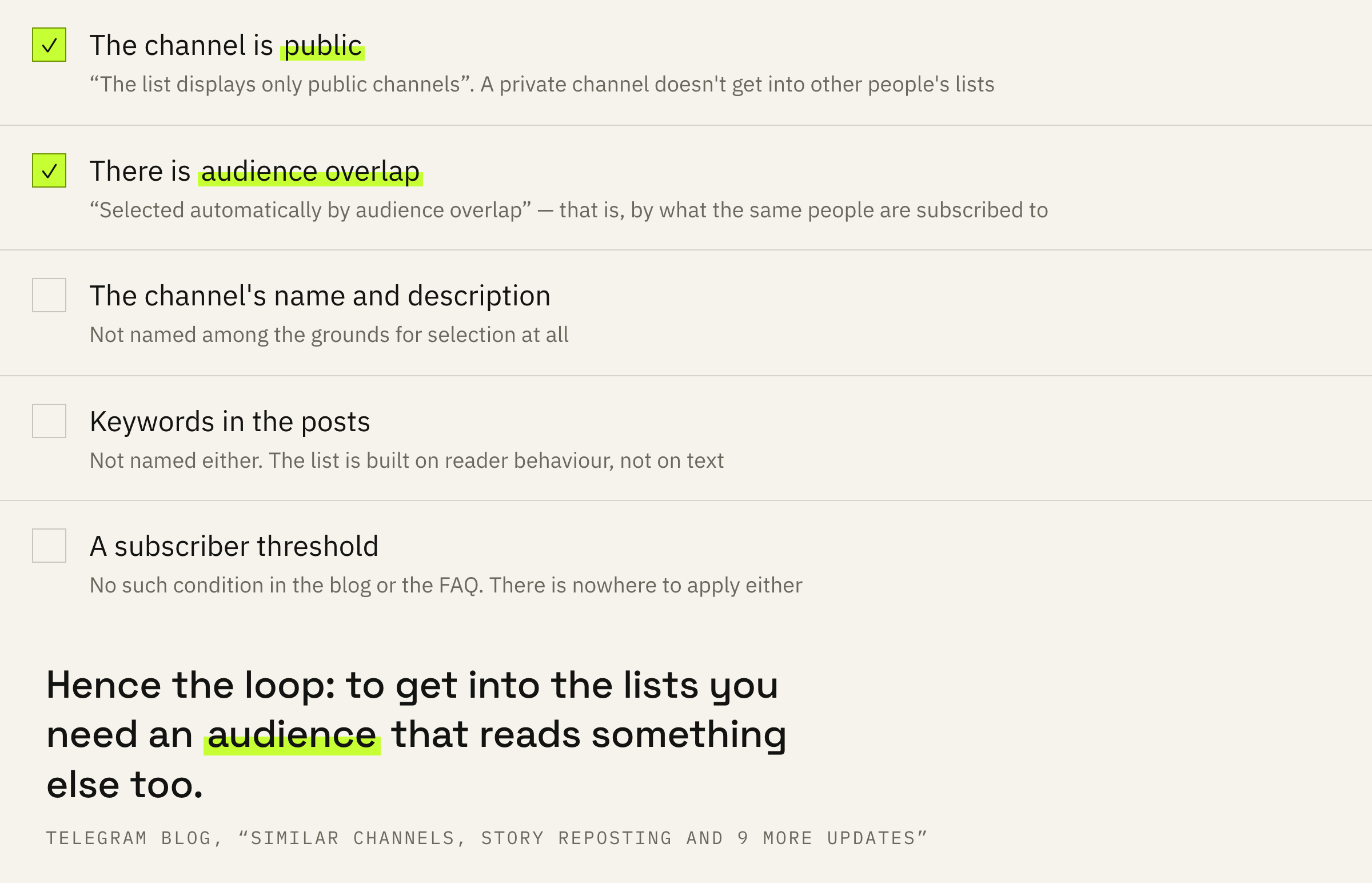
Telegram never names a subscriber threshold anywhere: not in the blog, not in the FAQ. There is also no described way to “apply” or “switch on” the display of your channel in other people's lists. All that is known is the two conditions above.
The showcase runs on the audience you already have
And that is its defining feature.
Put the two conditions together. The list is built on audience overlap, and overlap only appears once people who are subscribed to somebody else are already subscribed to you.
You get a loop: to land in other people's lists you need an audience; to gather an audience through the lists you need to land in them. There is nothing inside Telegram to break it with.
The first subscribers come from the outside — always. Similar channels amplify what already exists, but they don't create it from zero. You can't plan growth “through Telegram recommendations”: the platform has no such surface.
Where to get those first ones we covered from our own experience: how to move people from Threads to Telegram. The rules for the call to action are there too, and they decide whether the channel fills up or not.
There is a pleasant side to this design as well. Audience overlap means the channels shown next to you are the ones your own people read. Such a list is more precise than any topical selection, because it is assembled by behaviour, not by description.
If the channel is standing still and it's unclear where to get people from, we'll look at your funnel and tell you where it breaks off.
What to do this week
Four steps, and the first of them is technical.
First: make sure the channel is public. A private channel won't appear in other people's lists, and the platform states that condition directly: only public channels appear in the list.
Second: open your channel's profile and look at the similar channels tab. The list will show whose audience overlaps with yours, and that is a ready-made map of how the platform sees you.
Third: pick one external source and bring people from there. Not three at once: while there is a single source, you can see whether it works.
Fourth: count click-throughs and how many of those who came stayed a week later. The first number tells you about the link, the second about the channel, and the subscriber counter explains neither.
A month later, open the similar channels tab again. If the list has changed, so has the audience overlap — meaning people from a new environment have come to you.
What not to do
Four attempts to influence something that isn't tuned that way.
And the opposite extreme: deciding that since there is almost no automatic showcase, the platform is bad. It is simply different mechanics. On Telegram a person who has subscribed once reads you without competing against other people's posts — exactly what feeds don't offer.
What to do next
Two minutes for today.
Open your channel's profile and look at the similar channels tab. If it isn't there, the first thing to check is whether the channel is public: for getting into the lists that condition is mandatory.
If the list is there, read it as the platform's answer to the question “who are my readers”. Then choose where to bring new ones from, and bring them from there for at least a month.
We'll look at your channel and at where people come into it from, and tell you at which step the funnel loses the most.
If you want the channel to fill up predictably — leave a request. We'll get in touch if there are slots available at the moment. There is usually a queue and a wait.